
Defend declining eels from deadly dam dangers
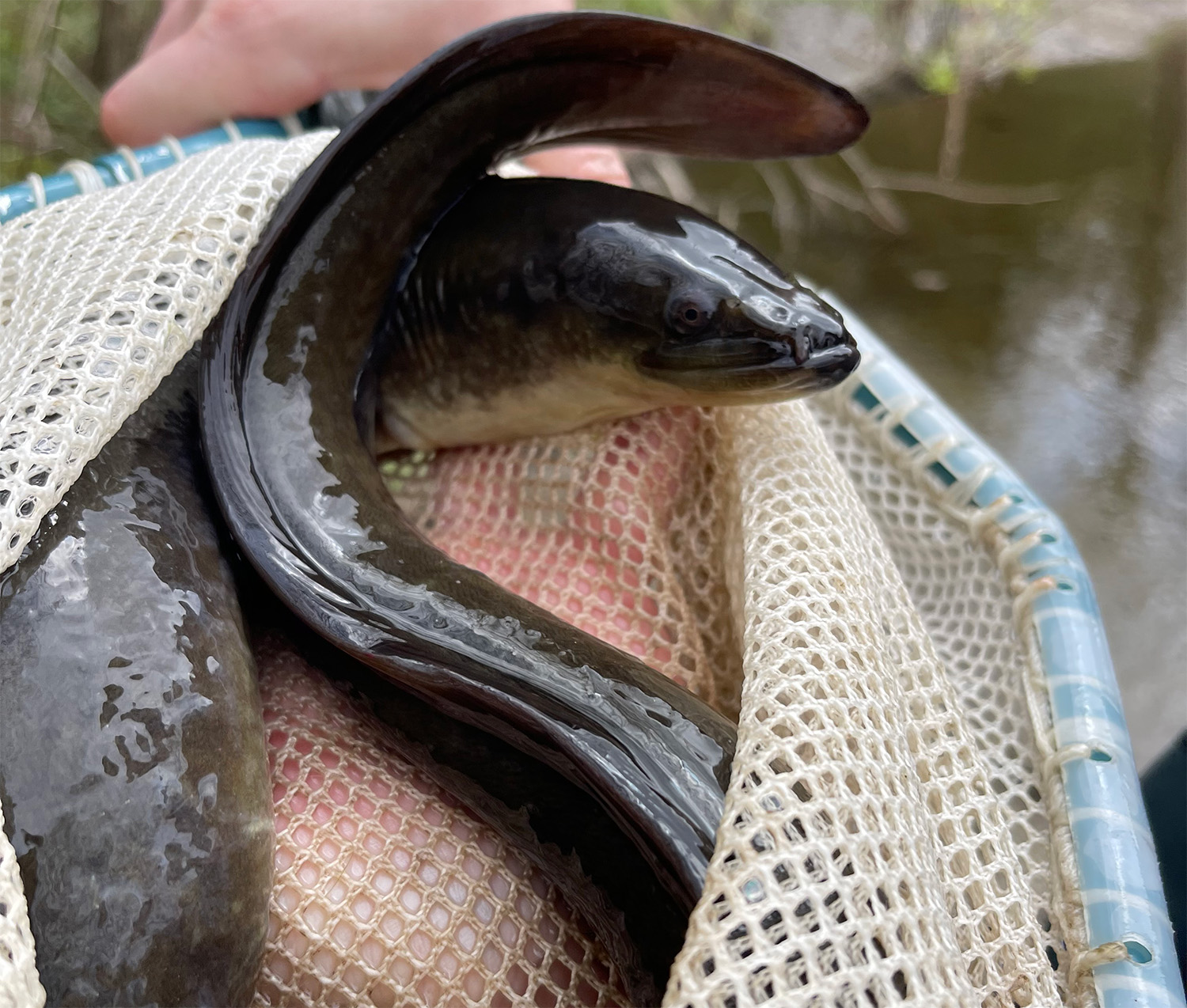
American eel was once among the most abundant species found in the creeks and streams of the Hudson River watershed, but in recent decades their numbers have declined dramatically. This year, recognizing that decline, the New York State Department of Environmental Conservation designated American eel as a “species of special concern.”
A significant barrier to restoring these fish to abundance is the presence of hydroelectric dams on the Hudson and its tributaries. Without modifications to help aquatic species safely pass, these dams can both restrict eels from reaching their necessary habitat and suck them into deadly turbines. Studies show that a single barrier blocks roughly 90 percent of eels from passing upstream.
Eels have a unique and extraordinary life cycle, spawning in the Sargasso Sea near Bermuda, entering the Hudson as tiny “glass eels,” and then living their lives in the freshwater portions of the river and its tributaries for up to 20 years before returning to sea to spawn.
Currently available changes to existing hydroelectric facilities, including eel ladders and properly sized intake screens, can promote eels’ safe passage.
Join us in advocating for these necessary modifications at facilities across the Hudson River watershed in order to protect this imperiled, iconic species.
Sign the Petition
Letter
I support the modification of hydroelectric facilities in the Hudson River Watershed in order to promote the safe up- and down-stream passage of American eels.
American eels were once among the most abundant species throughout the creeks and streams of the Hudson River Watershed, but their population is a small fraction of its historic abundance. The Atlantic States Marine Fisheries Commission (ASMFC) recognizes that the American eel population is “depleted.” Recognizing the need to better protect this species, in 2025 the New York State Department of Environmental Conservation designated American eels as a “species of special concern.”
The American eel is a keystone species in the Hudson River and its tributaries, serving as an important predator and prey throughout the watershed, as well as its critical role as an indicator species of ecosystem health and high water quality.
Today, one of the most significant impediments to restoring these fish is the presence of hydroelectric dams on the Hudson and its tributaries. Without modifications, these dams restrict eels from reaching historic habitat or, worse, kill them directly in electric-generating turbines.
Studies show that roughly each barrier on a given stream blocks approximately 90 percent of eels from passing upstream. Many Hudson River tributaries have several dams, resulting in eels’ extirpation from many creeks and streams where they were once abundant.
While eels can’t be fully protected from these threats, readily available modifications to existing hydroelectric facilities can promote their passage upstream, through modifications such as eel ladders, and protect their safe passage downstream, through modifications such as properly sized intake screens.
As hydroelectric dams in the Hudson River Watershed are licensed or relicensed by the Federal Energy Regulatory Commission (FERC), I support promoting the safe up- and downstream passage of eels through permit conditions that require these effective protections. This includes, but is not limited to, licensing for the following highest priority facilities, listed south to north, that would promote significant habitat restoration in the Hudson River watershed:
- Wallkill River: Sturgeon Pool and Dashville hydroelectric facilities (Towns of Esopus and Rosendale, Ulster County)
- Kinderhook Creek: Chittenden Falls hydroelectric facility (Town of Stockport, Columbia County)
- Kinderhook Creek: Stuyvesant Falls hydroelectric facility (Town of Stuyvesant, Columbia County)
- Kinderhook Creek: Valatie Falls South hydroelectric facility (Town of Stuyvesant, Columbia County)
- Hudson River: Green Island hydroelectric facility at the Federal Dam at Troy (Village of Green Island, Albany County and City of Troy, Rensselaer County)
In addition, I support modifications to promote safe upstream and downstream passage of American eels at the following facilities, to promote the restoration of their populations in the identified tributaries:
- Buttermilk Brook: Buttermilk Falls hydroelectric facility (Village of Highland Falls, Orange County)
- Moodna Creek: Salisbury Mills hydroelectric facility (Towns of Blooming Grove and Cornwall, Orange County)
- Fishkill Creek: Groveville hydroelectric facility (City of Beacon, Dutchess County)
- Fishkill Creek: Texaco hydroelectric facility, (Town of Fishkill, Dutchess County)
- Wappinger Creek: Wappingers Falls hydroelectric facility (Village of Wappingers Falls, Dutchess County)
- Rondout Creek: High Falls hydroelectric facility (Town of High Falls, Ulster County)
- Wallkill River: Wallkill hydroelectric facility (Town of Shawangunk, Ulster County)
- Wallkill River: Walden hydroelectric facility (Village of Walden, Orange County)
- Wallkill River: Montgomery Worsted hydroelectric facility (Village of Montgomery, Orange County)
- Rondout Creek: High Falls hydroelectric facility (Town of Marbletown, Ulster County)
- Catskill Creek: Mill Pond hydroelectric facility (Town of Catskill, Greene County)
- Poesten Kill: Mt Ida hydroelectric facility (City of Troy, Rensselaer County)
- Mohawk River: Mohawk Paper Mills hydroelectric facility (City of Waterford, Saratoga County)
- Mohawk River: New York State Dam hydroelectric facility (City of Cohoes, Albany County)
- Mohawk River: School Street hydroelectric facility (City of Cohoes, Albany County)
- Mohawk River: Crescent hydroelectric facility (Towns of Colonie, Albany County and Waterford, Saratoga County)
- Mohawk River: Vischer Ferry hydroelectric facility (Towns of Niskayuna, Schenectady County, and Clifton Park, Saratoga County)
- Hudson River: Mechaniville hydroelectric facility (City of Mechanicville)
- Hudson River: Upper Mechanicville hydroelectric facility (City of Mechanicville)
- Hudson River: Stillwater hydroelectric facility (Village of Stillwater)
- Hoosic River: Schaghticoke hydroelectric facility (Town of Schaghticoke, Rensselaer County)
- Hoosic River: James Thompson hydroelectric facility (Town of Valley Falls, Rensselaer County)
- Hoosic River: Johnsonville hydroelectric facility (Town of Valley Falls, Rensselaer County)
- Hoosic River: Hoosick Falls hydroelectric facility (Village of Hoosick Falls, Rensselaer County)
- Fish Creek: Schuylerville hydroelectric facility (Town of Schuylerville, Saratoga County)
- Fish Creek: Victory Mills hydroelectric facility (Village of Victory, Saratoga County)
- Battenkill: Clarks Mills Lower hydroelectric facility (Town of Greenwich, Washington County)
- Battenkill: Clarks Mill Upper hydroelectric facility (Town of Greenwich, Washington County)
- Hudson River: Fort Miller hydroelectric facility (Town of Fort Edward, Washington County)
Supporters
